
Mood: Protected, Sacred, Focused
Best For: Altar cloth, ceremony table, meditation space
Made by: Shipibo-Konibo women
Origin: Ucayali River, Peruvian Amazon
Colors: Black, or white with red, green and blue
Sizes: 35 x 62 cm and 75 x 62 cm
A cloth for your altar, covered in the songs of the Shipibo.
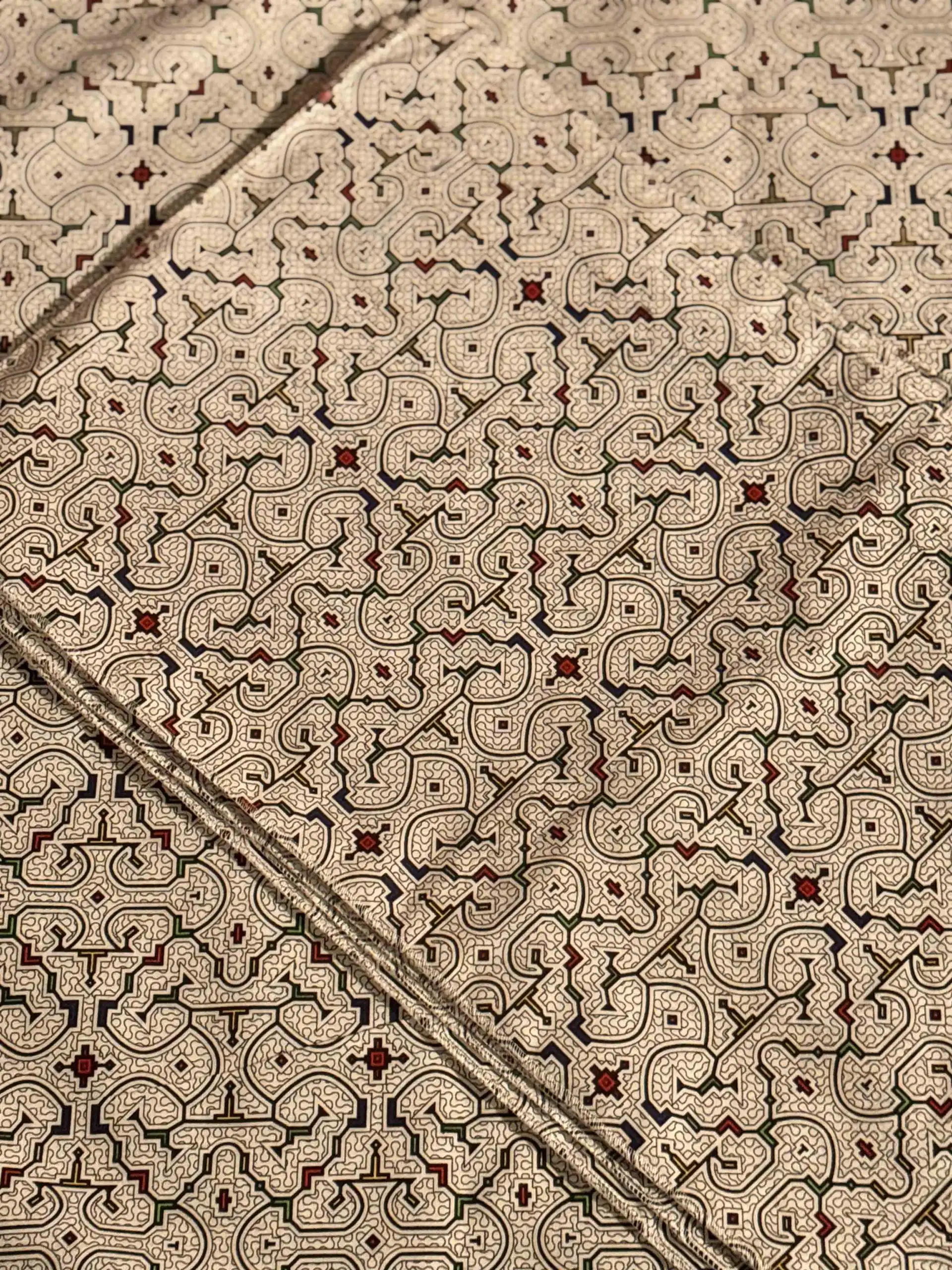
Shipibo Altar Cloth with Kene Patterns
These textiles carry traditional Shipibo patterns and are made to be used as altar cloths or ceremonial table mats. They come in two versions and two sizes, small (35 x 62 cm) and large (75 x 62 cm):
- Black – a classic black kene on a light base: repeating geometric shapes, connected lines and spirals. A calm, strong cloth for everyday altar work.
- White with color – the same kind of pattern, with red, green and blue accents on a white base. Often chosen for ceremonies of healing and cleansing.
What Kene Is
The Shipibo-Konibo live along the Ucayali River in the Peruvian Amazon. Their patterns are called kene, and they are made mostly by women. For the Shipibo, kene is not decoration but a visual form of song: the healers see these patterns in ayahuasca ceremonies and sing them as icaros, healing songs, and a person who knows the pattern can sing it from the cloth. In 2008 Peru declared Shipibo-Konibo kene part of the cultural heritage of the nation.
Ronin and the Origin of Shipibo Patterns
The Shipibo tell that in the beginning, before there was earth or forest, a great black serpent moved through the universe. Its name was Ronin, the cosmic anaconda. It was ancient, powerful and wise, and it glided silently between the stars and along the rivers of the sky.
As Ronin moved, it began to sing. It was a sacred song, an icaro, full of the secrets of creation, healing and life. The song was more than sound: it was a vibration that went through the whole cosmos. And as Ronin sang, patterns began to appear on its skin, growing and changing with the melody. Every curve, every line and every shape was a note. Together they formed a map of the universe, holding the knowledge of plants, animals and spirits, and of the threads that connect all beings.
When Ronin finally came down to the earth, it became the great river, and its body is still there, they say, in the winding waters of the Ucayali where the Shipibo live. The people saw the patterns on the skin of the anaconda and learned them. The women began to paint and embroider them, and the healers began to sing them. Ronin is still called the mother of the waters and the owner of all designs.
That is why, for the Shipibo, a pattern and a song are the same thing. A healer in ceremony sees kene glowing over the body of the person in front of him, and sings it, to put back in order what has been disturbed. A woman embroidering a cloth is, in a way, writing down a song. Every kene, on fabric, on ceramics or on skin, still carries a piece of Ronin’s first melody, and the Shipibo honor the great serpent each time they sing in ceremony.
How to Use the Cloth
Lay it on your altar or ceremony table and place on it what you work with: rapé, palo santo, crystals, a candle. Placing kene under sacred objects is believed to ground and protect the space. If you want a kene piece for the wall, see our Shipibo embroidered textiles.
Reviews
There are no reviews yet.